The Doing Got Cheap. Now What? | Claude Fable 5 Changes Work
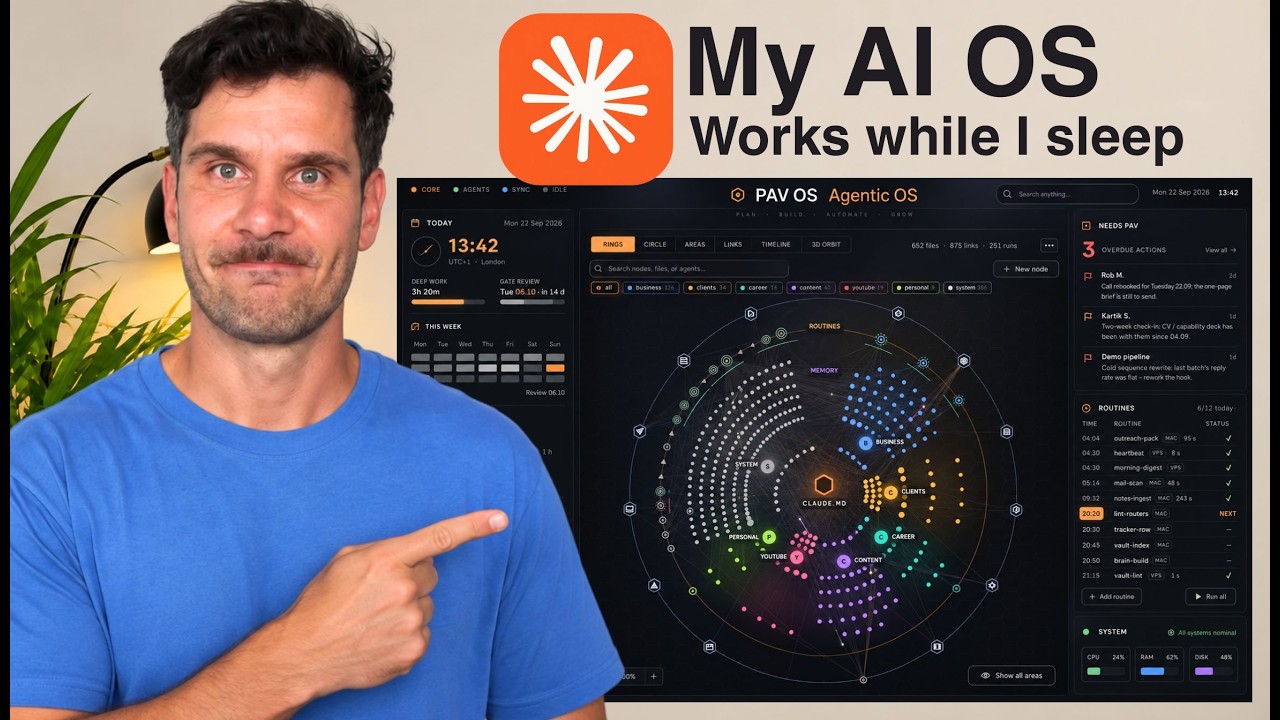
Nate B Jones reviews the pulled Fable 5 model — which he believes is a ~10 trillion parameter pre-train — arguing its real significance is not being smarter but bigger: it carries whole jobs unattended, which exposes that most people's asks are still prompt-sized, and it demands a new skill he calls detailed task imagination plus a 'model manager' way of working.
AI News & Strategy Daily | Nate B Jones18 minTranscript found
Quick learning frame
Read this before watching.
AI strategy chooses where agents create durable leverage, then manages scope, adoption, risk, and measurable outcomes.
New playlist item from AI News & Strategy Daily | Nate B Jones; queued for transcript-backed review, topic mapping, and a practical learning artifact.
Skill you build: The ability to spot Fable-sized jobs — big, gnarly, untracked work — and package them as complete assignments with a data pack, a written definition of done, and owner-level review instead of prompt-sized asks.
Watch for the shift from claim to mechanism. The learning value is the point where the transcript reveals a repeatable action, tool boundary, context move, review habit, or artifact.
Concept diagram
Where this video fits.
01Use case
02Workflow pain
03Agent role
04Adoption path
05Risk
06Metric
07Pilot
Deep lesson
Turn this video into working knowledge.
3,645 cleaned transcript words reviewed across 1,008 timed caption segments.
Thesis
The Doing Got Cheap. Now What? | Claude Fable 5 Changes Work teaches a practical ai strategy move: Nate B Jones reviews the pulled Fable 5 model — which he believes is a ~10 trillion parameter pre-train — arguing its real significance is not being smarter but bigger: it carries whole jobs unattended, which exposes that most people's asks are still prompt-sized, and it demands a new skill he calls detailed task imagination plus a 'model manager' way of working.
The goal is not to remember the video. The goal is to extract the operating principle, tie it to timestamped evidence, test how far the claim transfers, and make something reusable.
0:26
The big model feeling
“are dropping in the next month or so. You should be expecting this from open-source models in the next 4 5 6 months. I want to drop this Fable 5 model review now because, yes, I hope Fable...”
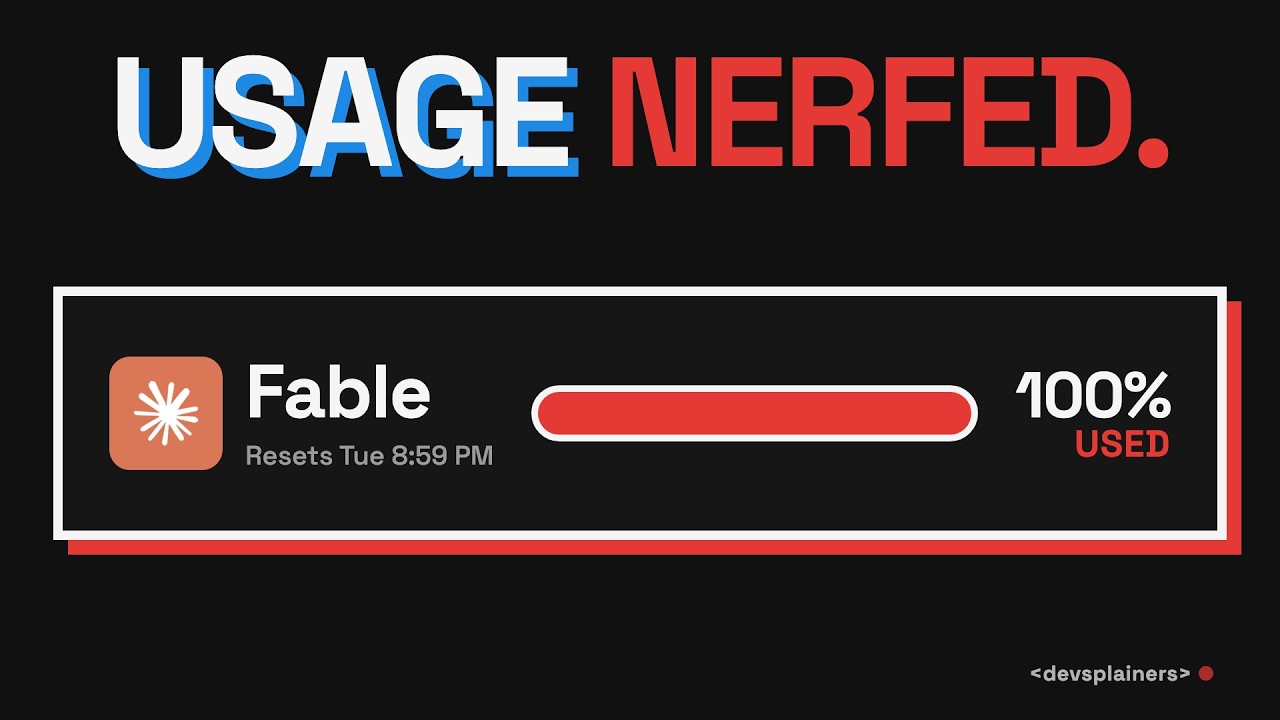
Fable 5 behaved unlike earlier models: instead of smoothing over garbage data it quarantined it, inventoried fake credentials without leaking them, and unprompted built a review queue of uncertain calls — behaving like it expected to be checked — letting Nate genuinely walk away from running work for the first time; Stripe reportedly compressed months of engineering into days, though it's expensive ($50 per million output tokens), has weak visual taste, and still ends every run with human review. List the failure modes you currently hover over AI to catch (invented sources, silent fixes, smoothed conflicts) and define what evidence would let you stop hovering on a delegated task.
8:54
Task imagination
“model. It's thoughtful, it's thorough, it tackles big task. It's exactly what I've been describing for code, right? It's something where you can ask it to refactor an entire repo and it can do it. So, you need...”
The gap between headlines and your workday is ask size: 2023–24 taught us to ask small, so every frontier model feels the same at prompt scale — the new skill is 'give, don't ask': assemble a pile of source material, a clear written paragraph of what done looks like, rough guidelines for judgment calls, then hand it over and walk away; spending 3–4 hours building the data pack is worth it if the job saves two weeks. Write down the 'weather' over your work — the gnarly jobs nobody owns that make you sigh — pick the most valuable one, and spend time locating the data you would need to hand the whole job to a model.
12:39
Become a model manager
“feeding. You need model managers for this model to do well. You need people who will be able to say, "This is the scope and scale and direction and this is the data that we're feeding this model...”
A model that does two weeks of work only kills pure-execution, zero-judgment jobs, because it needs heavy care and feeding: model managers who set scope, direction, and data, then review output like an owner reviewing a senior stakeholder's work — the people working with these models are working harder than ever, working themselves into new jobs, and an IC who does the exercise and ships Fable-scale wins is inviting a promotion, not a layoff. Reframe your role in one paragraph as a model manager: for your biggest current project, specify the scope, the data the model needs, the judgment calls it can make alone, and how you will review the finished work.
01
Use case
Start with this video's job: Nate B Jones reviews the pulled Fable 5 model — which he believes is a ~10 trillion parameter pre-train — arguing its real significance is not being smarter but bigger: it carries whole jobs unattended, which exposes that most people's asks are still prompt-sized, and it demands a new skill he calls detailed task imagination plus a 'model manager' way of working. Treat "Use case" as the outcome you are trying to make visible, not a topic label. Anchor it to 0:26, where the video says: “are dropping in the next month or so. You should be expecting this from open-source models in the next 4 5 6 months. I want to drop this Fable 5 model review now because, yes, I hope Fable...”
02
Workflow pain
Use "Workflow pain" to locate the part of the ai strategy mechanism the video is demonstrating. Ask what changes in your real setup if this claim is true. Anchor it to 8:54, where the video says: “model. It's thoughtful, it's thorough, it tackles big task. It's exactly what I've been describing for code, right? It's something where you can ask it to refactor an entire repo and it can do it. So, you need...”
03
Agent role
Turn "Agent role" into the reusable artifact for this lesson: A one-page AI workflow decision memo with use case, leverage claim, risks, metric, and pilot plan. This is where watching becomes something you can inspect and reuse.
04
Adoption path
Use "Adoption path" as the application surface. Decide whether the idea touches a browser flow, a local file, a model choice, a source document, a UI, or a review step.
05
Risk
Use "Risk" to prove the lesson. The evidence should connect back to the video title, transcript anchors, and a concrete output, not a generic best-practice claim.
06
Metric
Use "Metric" to carry the idea forward: save the prompt, checklist, diagram, or operating rule that would make the next agent run better.
07
Pilot
Connect "Pilot" to The Doing Got Cheap. Now What? | Claude Fable 5 Changes Work by naming the claim, the evidence, and the artifact it should produce.
Example
Source-backed artifact packet
Convert the video into a scoped artifact request that includes the transcript claim, mechanism, acceptance criteria, and proof. The output should be a one-page ai workflow decision memo with use case, leverage claim, risks, metric, and pilot plan..
Example
AI strategy proof brief
Separate what the speaker claims, what the demo actually proves, and what still needs outside verification before you adopt the ai strategy pattern.
Example
Teach-back module
Transform the lesson into a definition, a Use case -> Workflow pain -> Agent role -> Adoption path -> Risk -> Metric -> Pilot diagram, one misconception, one practice exercise, and a check-for-understanding question.
Do not learn it wrong
Treating the title as the lesson without checking what the transcript actually says.
hype laundering
market claims without operational proof
strategy with no pilot
Letting the lesson drift into generic AI business advice.
Letting the lesson drift into unsupported market forecasts.
Letting the lesson drift into no-risk adoption plans.
Do not count this as learned until these are true.
01
State the transcript-backed claim in your own words: Nate B Jones reviews the pulled Fable 5 model — which he believes is a ~10 trillion parameter pre-train — arguing its real significance is not being smarter but bigger: it carries whole jobs unattended, which exposes that most people's asks are still prompt-sized, and it demands a new skill he calls detailed task imagination plus a 'model manager' way of working.
02
Explain the practical stakes without hype: New playlist item from AI News & Strategy Daily | Nate B Jones; queued for transcript-backed review, topic mapping, and a practical learning artifact.
03
Map the idea onto the Use case -> Workflow pain -> Agent role -> Adoption path -> Risk -> Metric -> Pilot sequence and name the weakest link.
04
Produce the artifact and include the evidence that proves it: A one-page AI workflow decision memo with use case, leverage claim, risks, metric, and pilot plan.
Put it into practice
Give this grounded prompt to Codex or Claude after watching.
You are helping me turn one specific YouTube video into real, durable learning.

Source video:
- Title: The Doing Got Cheap. Now What? | Claude Fable 5 Changes Work
- URL: https://www.youtube.com/watch?v=2w_vwQVvFmc
- Topic: Creative Automation
- My current learning frame: Choose one painful, untracked, two-week-sized job in your work, spend a few hours assembling its data pack and a one-paragraph definition of done, hand the whole thing to the most capable model you can access, walk away, and then review the output like an owner — logging what the model surfaced for your judgment.
- Why this matters: New playlist item from AI News & Strategy Daily | Nate B Jones; queued for transcript-backed review, topic mapping, and a practical learning artifact.

Transcript anchors from this exact video:
- 0:26 / Evidence 1: "are dropping in the next month or so. You should be expecting this from open-source models in the next 4 5 6 months. I want to drop this Fable 5 model review now because, yes, I hope Fable..."
- 2:45 / Evidence 2: "the data instead of fixing it. It found the fake credentials and inventory them without leaking them and then, and this is the part that got me, it built me a review queue. Every call it wasn't sure..."
- 4:44 / Evidence 3: "that's the kind of scale that you want to give this model. Think back. In 2023 and 2024, asking big got you burned, right? You handed a model something real, and it lost the thread by step six,..."
- 7:19 / Evidence 4: "This is about jobs that are bigger than that, that aren't on anybody's tracker yet because they're dirty and ambiguous. And yes, I'm picking those big numbers on purpose because these are numbers that you need to make..."
- 8:54 / Evidence 5: "model. It's thoughtful, it's thorough, it tackles big task. It's exactly what I've been describing for code, right? It's something where you can ask it to refactor an entire repo and it can do it. So, you need..."
- 12:39 / Evidence 6: "feeding. You need model managers for this model to do well. You need people who will be able to say, "This is the scope and scale and direction and this is the data that we're feeding this model..."
- 17:14 / Evidence 7: "I've got a a set of Fable specific skills that help when Fable is struggling with something for you. For example, writing. Like if you need to get Fable to read your voice, what does that look like?"

Video-aware target:
- Prompt lane: AI strategy
- Mechanism to extract: Separate strategic signal from launch noise by identifying the workflow change and the evidence needed to trust it.
- Artifact to produce: A one-page AI workflow decision memo with use case, leverage claim, risks, metric, and pilot plan.
- Artifact must include: use case; workflow change; risk; metric; pilot scope

Your task:
1. Use the transcript anchors above as the primary source packet. If you add outside context, label it clearly as outside context and keep it secondary.
2. Create a source-check table with columns: timestamp, claim, transcript support, what the demo proves, confidence, and what still needs verification.
3. Extract the actual teachable mechanism from the video: Separate strategic signal from launch noise by identifying the workflow change and the evidence needed to trust it. Do not invent claims that are not supported by the title, lesson frame, or transcript anchors.
4. Build a reusable learning artifact: A one-page AI workflow decision memo with use case, leverage claim, risks, metric, and pilot plan.
5. Include:
   - a plain-English definition of the core idea
   - a diagram or structured model using this sequence: Use case -> Workflow pain -> Agent role -> Adoption path -> Risk -> Metric -> Pilot
   - answers to these source questions: What work changes? | Who benefits? | What evidence would make the claim decision-grade?
   - 3 concrete examples that apply the video idea to real agentic work, such as agent pilot memo; skill-library adoption plan; model-release triage note
   - 2 failure modes the video helps prevent, chosen from the transcript evidence and these likely risks: hype laundering; market claims without operational proof; strategy with no pilot
   - a checklist for the next real workflow, focused on: workflow, leverage, risk, metric, pilot
   - one practical exercise with a clear done signal: Convert one strategy claim into a two-week pilot with a measurable done signal.
6. Add a "learning transfer" section: what changes in my workflow tomorrow if I actually learned this?
7. Add a "source check" section that cites which transcript anchor supports each major takeaway.

Quality bar:
- Make this specific to "The Doing Got Cheap. Now What? | Claude Fable 5 Changes Work", not a generic Creative Automation essay.
- Tie each strategic claim to transcript anchors, then label any market/news context that is not proven by the video.
- Prefer operational examples, failure modes, and reusable artifacts over broad definitions.
- Call out uncertainty instead of smoothing over weak evidence.
- Avoid these generic drifts: generic AI business advice; unsupported market forecasts; no-risk adoption plans.
- If evidence is weak or missing, stop and say what transcript segment or timestamp needs review instead of guessing.
- Finish with a concise artifact I could paste into my learning app.
Misconceptions
What to stop believing.
Creative AI removes the need for taste.
It increases the need for taste because output volume explodes.
The best prompt is enough.
References, critique, iteration, and post-production matter just as much.
Practice studio
Learning only counts when you make something.
01
Transcript evidence map
Separate what the video actually says from what you already believe about the topic.
3 source-backed takeaways with timestamps, confidence, and a transfer note.02
One useful artifact
Apply the video to a real workflow and produce a one-page ai workflow decision memo with use case, leverage claim, risks, metric, and pilot plan..
A reusable artifact with a done signal and one verification step.03
AI strategy teach-back card
Explain the ai strategy mechanism to someone who has not watched the video yet.
A 90-second explanation, one diagram, one example, and one misconception to avoid.
Recall check
Answer first, then reveal — without rewatching.
What specific behavior with messy data convinced Nate that Fable 5 felt categorically bigger?
How does 'detailed task imagination' differ from ordinary delegation?
Which jobs does Nate say a model like Fable 5 will actually eliminate, and why not more?
Source shelf
Use the video as a doorway, then verify with primary sources.